Autumn at the Koishikawa Korakuen Garden

Koishikawa Korakuen Garden is in Koishikawa, Bunkyo, Tokyo, next to Tokyo Dome City. It is one of two surviving Edo period clan gardens in modern Tokyo and one of the oldest and best preserved parks in Tokyo.
Koishikawa Korakuen Garden is in Koishikawa, Bunkyo, Tokyo, next to Tokyo Dome City. It is one of two surviving Edo period clan gardens in modern Tokyo and one of the oldest and best preserved parks in Tokyo.

After getting down from Mount Tsukiyomi, I walked the Ikoi trail (奥多摩湖いこいの路). It is a mostly flat path that follows the south bank of Lake Okutama from the Ogouchi Dam to the Yama-no-Furusato Village. The autumn colors were quite nice in the sunset. Very relaxing after the mountains! Although I only did a short section, the whole trail takes about 4 hours.
After the Village, the Ikoi trail gives way to the Lakeside Path (湖畔の小道), which ends at the floating Mugiyama-no-Ukihashi (麦山の浮橋) bridge (aka Drum Bridge). The bridge takes walkers across the lake, next to the Ogouchi Shrine on the north bank. However, it is sometimes removed in case of drought (this blog should have some up-to-date info on closures).

The Nippon Budokan is located in Kitanomaru Garden, north of the Tokyo Imperial Palace. Though it is sometimes used as a venue for big musical events, its primary purpose is for Japanese martial arts, including Kendo.

The National Olympic Stadium is in Shinjuku, Tokyo. It served as the main stadium for the 1964 Summer Olympics and will serve this function again in the 2020 Summer Olympics.

Shinjuku Gyoen National Garden is a large park in Tokyo that blends the French, English and Japanese styles of gardens.

After getting down from Mount Buko, instead of directly going back to Tokyo, I made a quick detour by Nagatoro, north of Chichibu City. The area is famous for the Iwadatami Rocks, next to the Arakawa River. It is possible to ride a traditional Japanese boat through rapids but I was too late for that. However, fall colors were in full swing. The other attraction of the area is Mount Hodo, a 497m high mountain. There is a ropeway to the summit about 20min from the Iwadatami Rocks. I arrived just in time to watch the sunset.

After reaching Lake Okutama at the end of the Mukashi Michi trail, I spent some time on the Ogouchi Dam itself. I then walked in the area north-west of the dam: There are some nice view points of the lake. Finally, I ended the day by hiking up Mount Kurato (倉戸山). However, the view at the summit was blocked by trees so it was a bit of a letdown. I also managed to get lost on the way down… Another option would have been to walk the combined Ikoi trail (奥多摩湖いこいの路 ; literally “Lake Okutama Relax Trail”) + Lakeside Path (湖畔の小道), two easy trails that follow the south bank of the lake all the way from the dam to the so-called Drum Bridge (a floating bridge), near the Ogouchi Shrine.
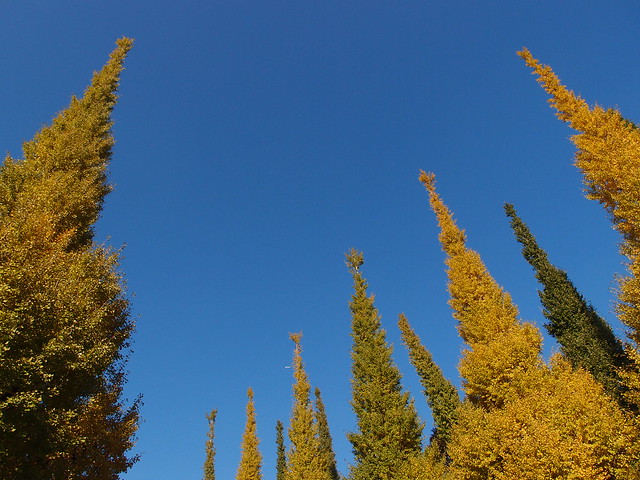
This festival begins as the trees in the Ginkgo Avenue inside Meiji Jingu Gaien turn yellow. There are also stalls selling specialty products from different regions of Japan, while the local mascots also make the occasional appearance. The event will last until December 9th.
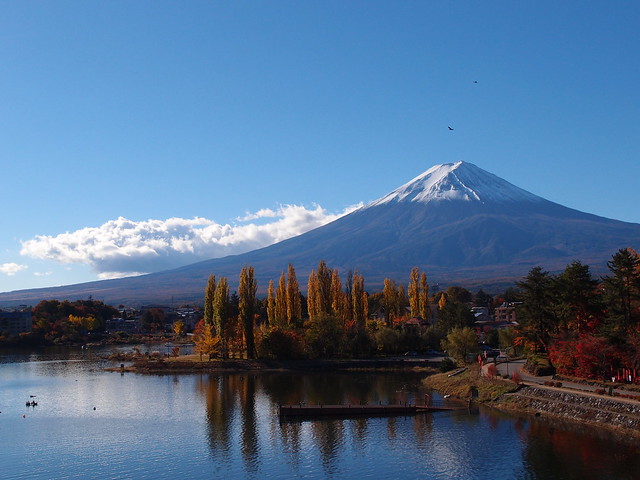
A couple of weeks ago, I went on a day trip to Fujikawaguchiko, in Yamanashi Prefecture. The area is located on the north side of Mount Fuji, west of Tokyo, and is famous for being a great spot for watching the mountain. It also known under the name “Fuji Five Lakes” (after Lake Kawaguchi, Lake Sai, Lake Shoji, Lake Motosu and Lake Yamanaka). On top of the lakes, the area has mountains and swathes of woodland, the most well-known being Aokigahara Forest, also called the “Sea of trees” (and sometimes “Suicide Forest”).
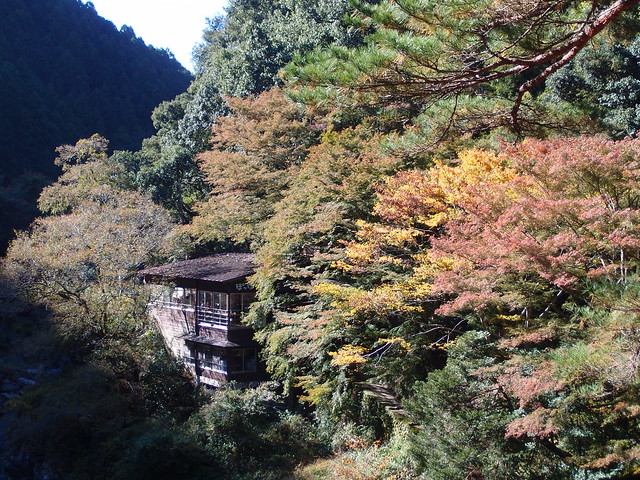
The Otama Trail is in Okutama City, in Nishitama District, the westernmost area of Tokyo. It is a gentle path that follows the Tama River from Kori to Okutama through well-built trails, mountain roads and suspension bridges. I followed it for a short section, from Hatonosu to Shiromaru Dam. Autumn colors were not fully there yet but the sights were still great.