Kasai Rinkai Park

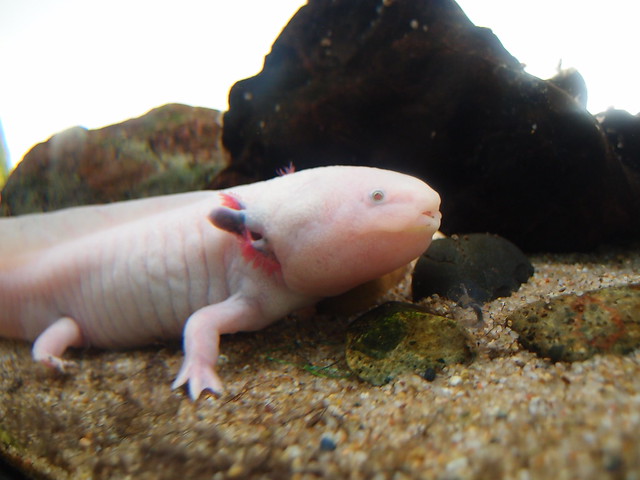
Kasai Rinkai Park (葛西臨海公園) is a park built on reclaimed land in Edogawa City, Tokyo. The park includes an aquarium (Tokyo Sealife Park), a bird sanctuary, two manmade islands, a viewing tower and a ferris wheel.
Kasai Rinkai Park (葛西臨海公園) is a park built on reclaimed land in Edogawa City, Tokyo. The park includes an aquarium (Tokyo Sealife Park), a bird sanctuary, two manmade islands, a viewing tower and a ferris wheel.

The National Art Center, Tokyo is a museum in Roppongi. Instead of maintaining a permanent collection, it focuses on serving as a venue for various art exhibitions. The architect for the building was Kisho Kurokawa. The facility has 47,960 m² of floor space on a 30,000 m² site with four stories above ground and one below.

Kyu-Furukawa Garden is a park in Kita City, Tokyo. The park includes an old western-style building designed by architect Josiah Conder, a rose garden, and a traditional Japanese-style garden.

For Christmas, Tokyo gets transformed into a sparkling winter wonderland as millions of colourful lights are displayed in trees, on and around buildings, and even on landmarks such as Tokyo Tower. This page lists many locations where such illuminations can be seen this season (most will be taken down on the 25th).

Yumenoshima Tropical Greenhouse Dome is located on a corner of Yumenoshima Park, in Koto Ward, Tokyo, and features a giant domed greenhouse. This dome holds about 1,000 varieties of tropical and subtropical plants, with colorful fruits and flowers throughout the year. It is heated using waste heat from trash burning at the nearby incineration plant. Boats floating at a yacht harbor can also be seen from the north side of the dome.

Lake Tama is an artificial lake in Higashiyamato City, in western Tokyo, right at the border with Saitama Prefecture. It was formed by damming up a river running through the Sayama valley, a project started in 1916 and completed in 1927. The lake now serves as a water reservoir for the residents of Tokyo.
The lake is surrounded by parks and forests and there is a popular cycling course extending from Nishitokyo City to Lake Tama. North of the lake towards Lake Sayama lies the Seibu Dome, home of the Saitama Seibu Lions baseball team. Also worthy of a visit are the buddhist Yamaguchi Kannon Konjoin (山口観音 金乗院) and Sayama Fudoson (狭山不動尊) temples.

Rikugien Garden (六義園) is a park in Bunkyo City, Tokyo. The garden consists of a pond, trees, and a hill. It was completed in 1702 and is a typical example of gardens from the Edo period. In November and early December, it becomes a popular spot for enjoying the autumn foliage (koyo). After dark, the garden stays open late and the trees are lit with special nighttime illuminations.

The Chiba Port Tower is a tower located in Chiba Port Park, Chiba. It is 125m tall and has 4 stories. It was built in 1986.
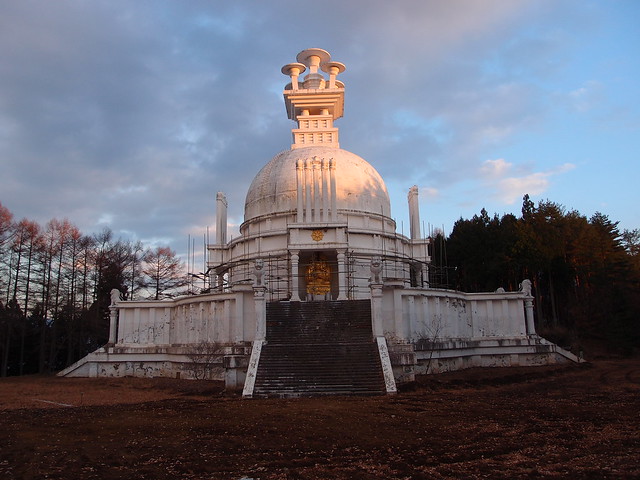
A Peace Pagoda is a Buddhist stupa. It is designed to inspire peace and to help unite people of all races and creeds in their search for world peace. Most peace pagodas built since World War II have been built under the guidance of Nichidatsu Fujii, a Buddhist monk from Japan and founder of the Nipponzan-Myohoji Buddhist Order. Fujii was greatly inspired by his meeting with Mahatma Gandhi in 1931 and decided to devote his life to promoting non-violence. In 1947, he began constructing Peace Pagodas as shrines to World peace.
The Tokyo Peace Pagoda was inaugurated in August 1974 at the summit of Mount Odera (大寺山; 960m) near Lake Okutama. Not sure why or when it was abandoned. I had a first glimpse of the pagoda when I went to Mount Gozen a few weeks ago and I had no idea what it was: It seemed like a large structure (actually 45m in height and 55m of diameter) but there was no mention of it on maps or tourism pamphlets. So I went to see for myself after I got down from Mount Mito. The trail starts between Mito Bridge and Miyama Bridge on Lake Okutama. It takes about 50min to the summit. After getting back to Lake Okutama, I crossed the Miyama Bridge and waited for the bus back to Okutama JR station.