Cherry blossoms at Yoyogi Park

With more than 600 cherry trees, Yoyogi Park is a popular hanami spot for the Harajuku crowd.
With more than 600 cherry trees, Yoyogi Park is a popular hanami spot for the Harajuku crowd.

Hatonomori Hachiman Shrine is a shinto shrine in Sendagaya, Shibuya City. Its distinguishing feature is its Fujizuka, called the Sendagaya Fuji. Fujizuka are small mounds that represent Mount Fuji. Fuji worshipers who are unable to do a pilgrimage to the top of Mount Fuji can use one of those instead. There are many other such Fujizuka in Tokyo (for example, at Shinagawa Shrine or Onoterusaki Shrine in Iriya).

With over 1,000 cherry trees, Shinjuku Gyoen National Garden is one of the best and most popular spots for hanami in Tokyo.
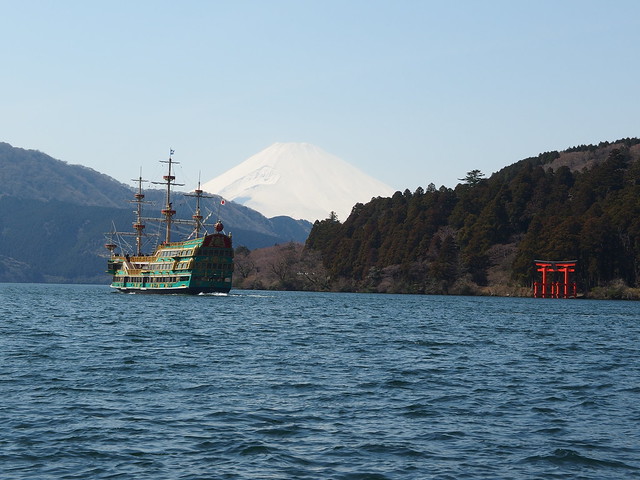
After getting down from Mount Komagatake and starting from the Hakone-en Komagatake Ropeway station, I walked on the road in the direction of Moto-Hakone, at the southern end of Lake Ashi. I spent some time at the Hakone shrine and at the Hakone Detached Palace. I then took the so-called Outer Rim Trail (外輪山のハイキングコース) that follows the Ashinoko Skyline Road in the mountains west of Lake Ashi. I followed the trail until I reached Togendai, at the northern end of Lake Ashi. I arrived just in time to catch the last express bus to Shinjuku.

The Oedo Fukagawa Cherry Blossom Festival is held in Fukagawa, in Koto City, east of the Sumida River. The area has large canals lined with many cherry trees. Although I did not get to ride them, boat cruises were available during the festival to see the flowers from a different angle.

While waiting for the start of the Kanamara festival mikoshi parade, I visited the nearby Daishi Temple, as well as Daishi Park and its Shinshu-en Chinese garden.

The Port of Kawasaki is an important port of Japan. It is located on the artifical island of Ogishima, facing Tokyo Bay. It is close to Kawasaki’s factory zone and Haneda Airport. I also visited the Marien Tower observatory, which offers a good view on Tokyo Bay and the industrial area.

While I was in Omiya for hanami, I also took the opportunity to visit the Omiya Bonsai Village. It is an area north of Omiya Park known as one of the most outstanding bonsai cultivating areas in Japan. This is where the Omiya Bonsai Art Museum is located, as well as numerous bonsai nurseries. A large bonsai festival (大盆栽まつり) is also held every year from May 3rd to May 5th.

Omiya Park (大宮公園) is a public park in Omiya, Saitama Prefecture, about 30min north of Tokyo. The park contains many cherry trees, a zoo and a museum. It is also the location of the shinto Hikawa Shrine (氷川神社).

Asukayama Park is a park located in Oji, Tokyo. It was established by Shogun Yoshimune Tokugawa in the early 18th century to serve as a good hanami (cherry blossom viewing) spot for Edo citizens.