japan

Izu Oshima
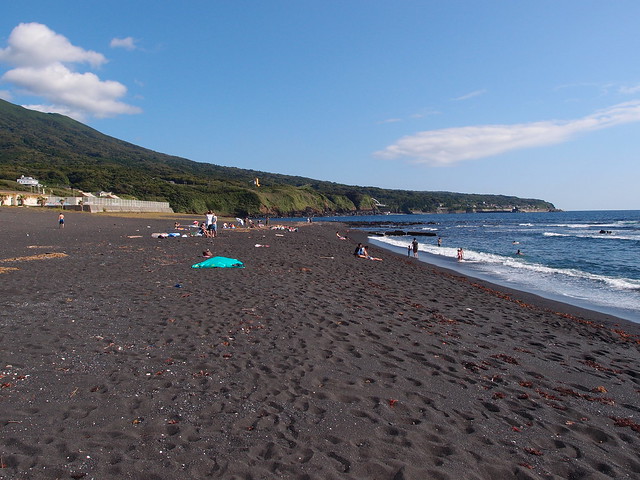
Oshima is an island lying about 100 km south of Tokyo and is the largest of the Izu Islands, a group of volcanic islands administered by the Tokyo Metropolitan government. Like the other ones, it is accessible (among other options) by a high-speed jet ferry that uses the hydrofoil technique: It makes it possible to get there from Tokyo in a mere 1h45. Oshima offers various interesting activities: Among the most popular are the beaches (made of black sand), the onsens and the volcano (Mount Mihara). There are also a zoo, a large camellia garden and a squirrel park.
Tokyo Wan Kannon

Last week, I went back to the city of Futtsu in Chiba Prefecture, but this time in the Sanukimachi area. This is where the Tokyo Wan Kannon, a 56m-high statue of Kannon, the buddhist Goddess of Mercy, is erected. I had a glimpse at it from the ferry when I went to Mount Nokogiri, wondering what that was. After I learnt more, I had to go!
The inside of the statue can be visited and there are stairs to an observatory at the top, which offers a great view on Tokyo Bay and the surrounding area. On a clear day, it is possible to see Mount Fuji. There are a also hiking trails and beaches nearby.
Tokyo Gate Bridge

Tokyo Gate Bridge (aka “Dinosaur Bridge”) is a 2,618-meter long bridge completed in 2012. It crossesTokyo Bay from Wakasu Island to Chuo Bohatei (“Central Breakwater”). Interestingly, both sites are artificial islands made out of trash, although only Chuo Bohatei is still active and serves as the final disposal site of waste from all of Tokyo. The bridge then leads to a tunnel emerging in Jonanjima Seaside Park, near Haneda Airport and the Port of Tokyo.
It is possible to walk on the bridge, starting from a tower in Wakasu Park (map). However, the tower on the other side is closed, so you have to double back. Access to the bridge is free but it closes at 5pm.
Comiket 84 - Summer 2013

The 84th Comiket (contraction of “Comic Market”) was held a few days ago at Tokyo Big Sight in Ariake, Tokyo. It is the world’s largest fair for self-published manga (a style of publishing known as dojinshi in Japan) but is also the occasion for cosplay and sales of products by established companies. It takes place twice a year, in summer and winter. About 500,000 attend the summer Comiket. It was indeed massive!

Jalala Cat Café in Akihabara

Last week, I went to the Jalala Cat Café in Akihabara. It is one of many places in Japan where you can pay to spend time with cats, petting them, playing with them or even feeding them. This particular cat café has about a dozen cats of different breeds, all roaming around freely or napping. Very relaxing!

The Great Buddha of Mount Nokogiri
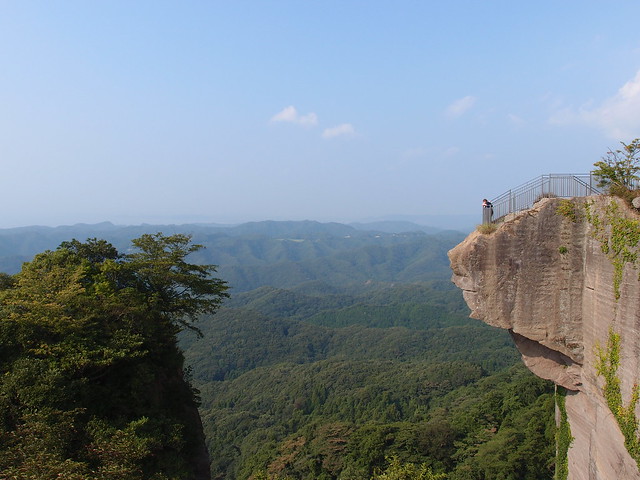
Last week, I went on a day trip to Mount Nokogiri (Nogiriyama). It is a small mountain (329m) on the south of the Boso Pensinsula in Chiba Prefecture. It hosts the Buddhist Nihon-ji temple, famous for its 31m stone-carved Daibutsu (Great Buddha), as well as a 100-foot Kannon relief image and 1500 hand-carved arhat sculptures. There are also observatories with a great view of the surrounding mountains and Tokyo Bay (although the heat made the scenery a bit hazy).
Tsukiji Honganji Bon Dance Festival

Mid-summer is the season for obon, the traditional Japanese festival of the dead. It is the occasion of festivals featuring taiko drumming and group dancing. The dancing takes place in a circle, with predefined moves depending on the songs. Here are some photos of the Tsukiji Honganji Bon Dance Festival held at the Tsukiji Honganji Temple in Tokyo.