Azalea Festival at Shiofune Kannon-ji Temple in Ome

While I was in the Ome area, I went to see the azalea festival at Shiofune Kannon-ji Temple (塩船観音寺). The temple is surrounded by a huge azalea garden with a giant statue of Kannon watching over it.
While I was in the Ome area, I went to see the azalea festival at Shiofune Kannon-ji Temple (塩船観音寺). The temple is surrounded by a huge azalea garden with a giant statue of Kannon watching over it.
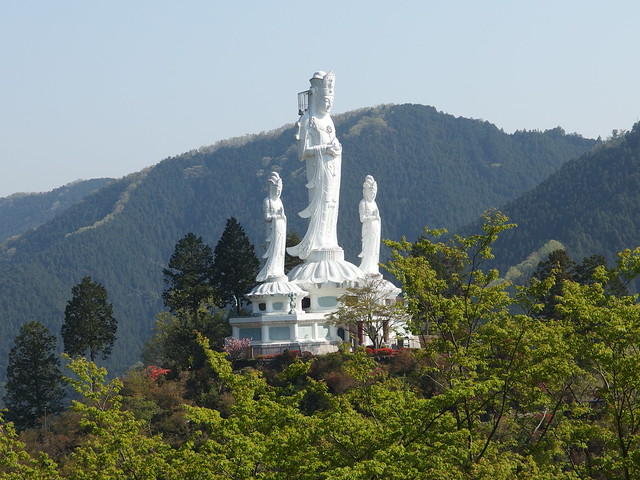
Last week, I went on a hike that started from Naguri Village, in Hanno City (Saitama Prefecture). While researching the path, I learned about the Hakuunsan Torii Kannon (白雲山 鳥居観音). It is a large park built on a mountain in Naguri, with multiple temples and monuments, the most impressive of which is the white Dai-Kannon (救世大観音 ; Guze Dai-Kannon). At 33m, it is a large statue of Kannon that can be seen from quite far. Like at the Tokyo Wan Kannon, it is even possible to climb to the head (but it was not open yet when I was there).

After the Tenen Hiking Course and Kencho-ji Temple (see part 2), I walked directly to Jocho-ji Temple, where the Daibutsu Hiking Course trailhead is located. This trail goes to the most famous sight in Kamakura: The Daibutsu (Great Buddha) statue at Kotoku-in Temple. It also passes through Genjiyama Park and near the Zeniarai-Benzaiten Shrine.

Kamakura is famous for its large number of buddhist temples and shinto shrines. The biggest is the Tsurugaoka Hachimangu Shrine (鶴岡八幡宮), located at the center of town. It is dedicated to Hachiman. On the same day, I also visited Egara Tenjin Shrine, Kamakura-gu Shrine and Zuisen-ji Temple (which I had already visited earlier).
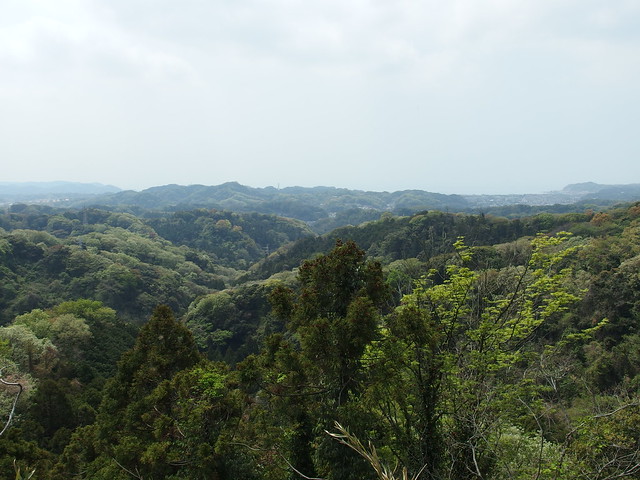
After the Gionyama Hiking Course (see part 1) and visiting Zuisen-ji Temple, I made my way to the trailhead of the Tenen Hiking Course, which goes to Kencho-ji Temple, in Kita-Kamakura.

On Saturday, I went to Senso-ji Temple in Asakusa to watch a nakizumo ceremony. During the event, babies held by sumo wrestlers face each other in a mock sumo game, two at a time. A referee shouts “Nake, Nake” (“Cry, Cry”) at them and the baby who then cries the loudest is declared the winner. If no baby cries inside of 1 minute, referees will use demon masks to try to scare the babies. The ceremony is religious and has its root in the belief that crying brings good health to the babies and scares evil spirits. It has been going on for 400 years and there are similar events (with different rules) in many places in Japan. I took a few pictures but my zoom is not very powerful. This page has more close-up shots of the event.

Gotoku-ji is a buddhist temple in Setagaya City, Tokyo. Its claim to fame is that this is supposedly where the maneki neko dolls (beckoning cat) were first used, as an offering by worshipers to show their gratitude when their wishes became true.

Located in Kyoto’s eastern mountain range on Mount Hiei (比叡山), Enryakuji (延暦寺) is one of the most important monasteries in Japanese history. Enryakuji’s temples are concentrated in three areas: Todo (east area), Saito (west area) and Yokawa (which I did not visit). I went there using the Sakamoto Cablecar, the longest cable car route in Japan. While I was there, it was raining heavily and there was a lot of fog.

